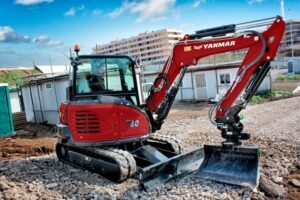


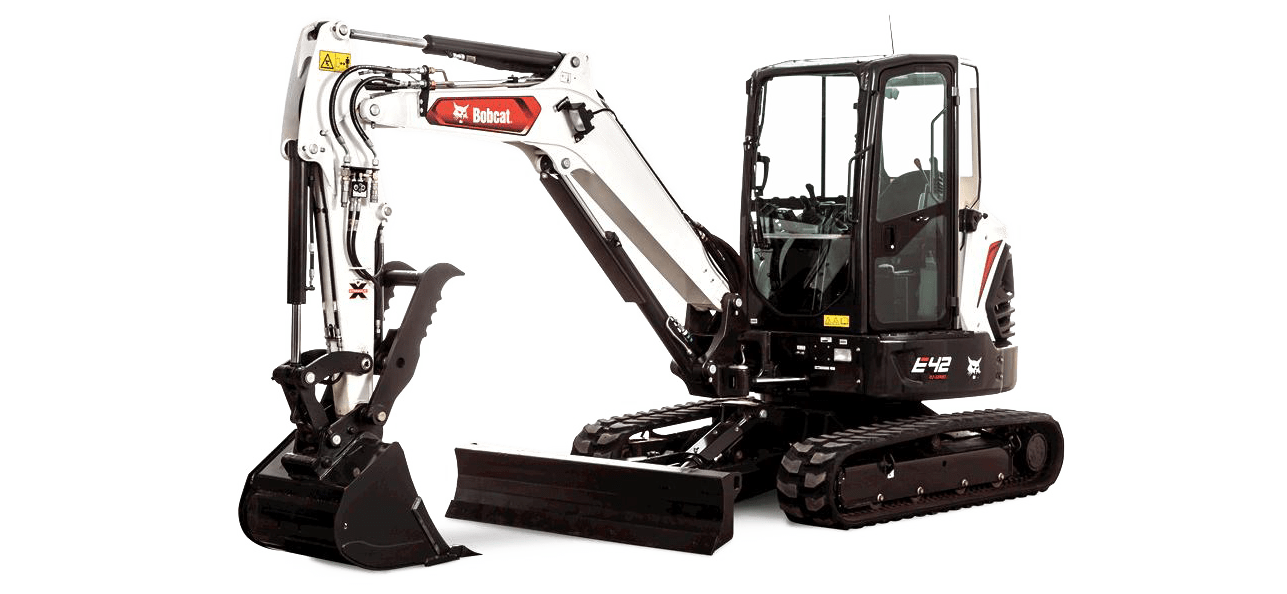
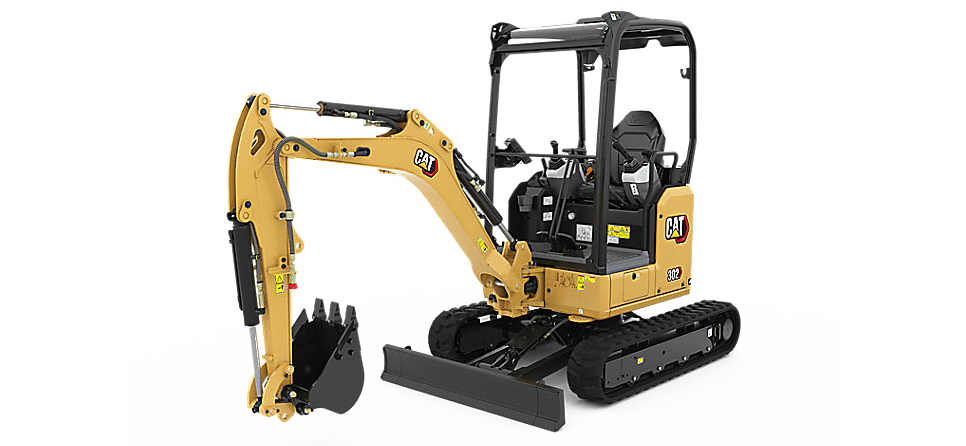






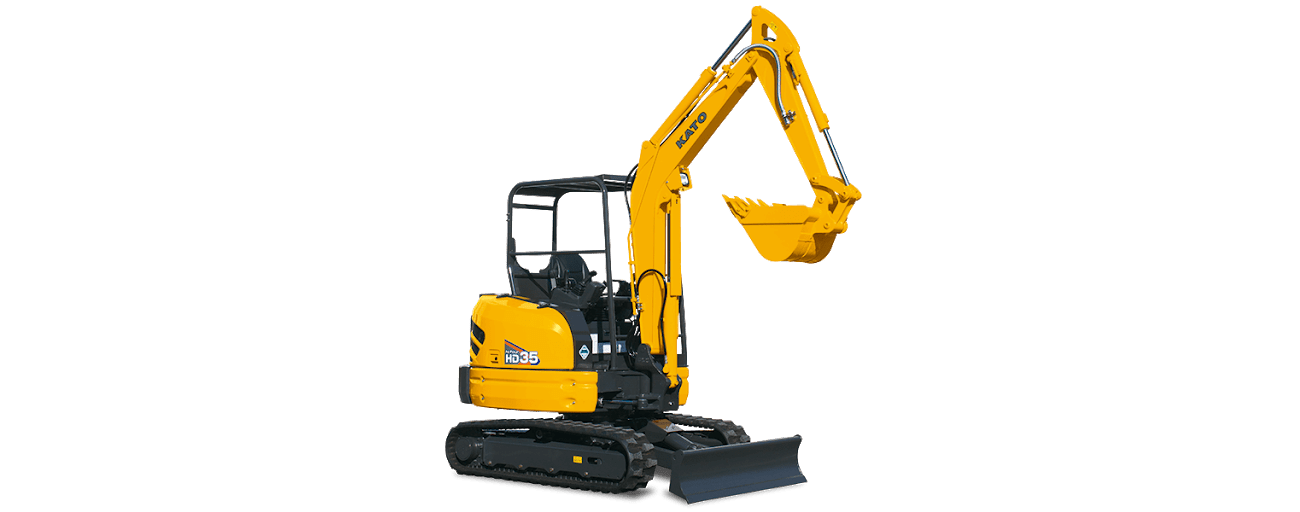


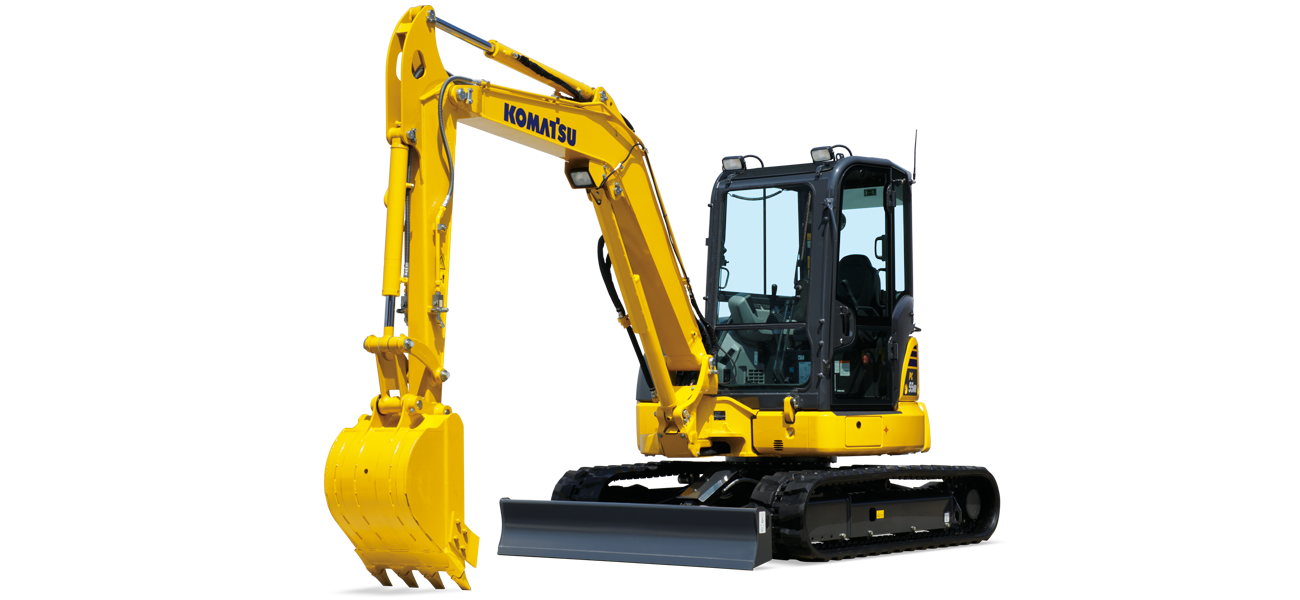

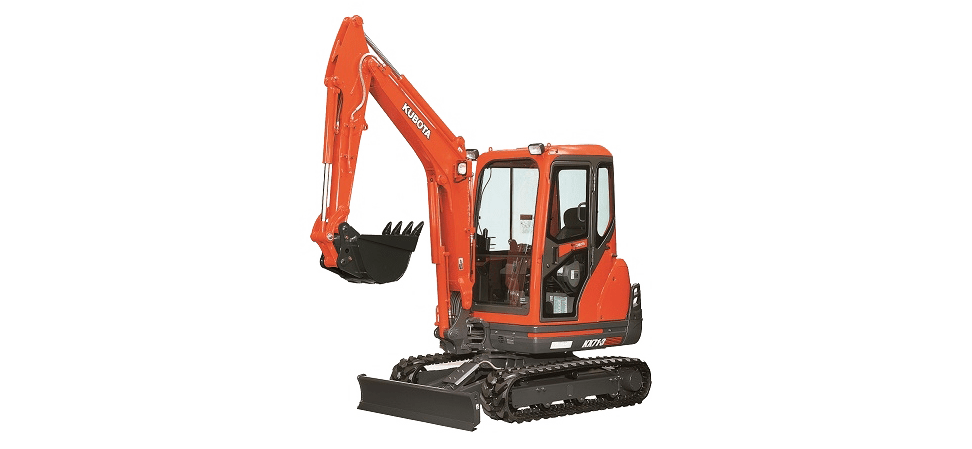










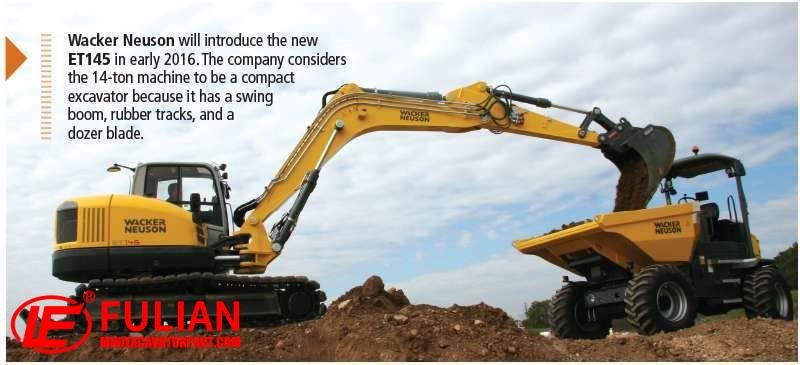
Mini excavators also experienced bracket creep, a category that was once restricted to machines weighing six tons, then rose to eight tons, and now includes machines weighing less than 10 tons. This range is now broad enough that some in the industry have defined subsets as micro, mini, mini, mini, no adjectives to describe larger units. Why is it rising steadily On the one hand is the demand of customers, on the other hand is the outperformance of original equipment manufacturers, on the other hand is because the market wants a more accurate classification of machines. For example, many 8 ton machines are actually much more important than 8 ton machines. Others abandoned the weight scale altogether, thinking that “Mini”meant anything with a blade and a swinging arm; others added rubber tracks to add a third defining feature. This is the approach taken by Newson. Markus, the company’s head of Mini Technology, said: “We call our new 14-tonne model ‘mini’because it meets all three criteria, even though it is heavier than the cut-off weight of the Mini,”says Red Auerbach. Interestingly, no one has included zero or reduced tail mini excavator in the definition they must have, although these are common features of these units, they are not universal.
Overall performance
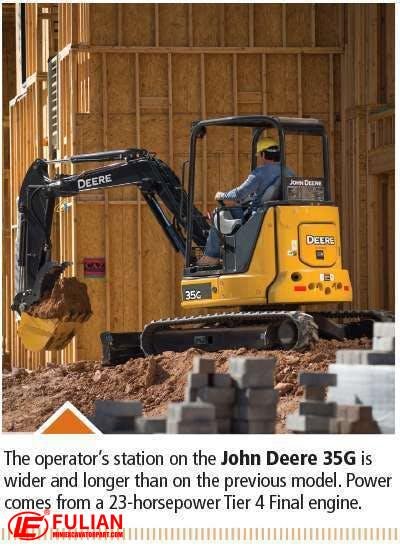
Overall performance to meet the final requirements of Tier 4, many models have 35 to 40 HP engines and now have engines with less than 25 HP. At the same time, the hydraulic system becomes more efficient. “For every horsepower in the engine, we get more hydraulic horsepower,”said bobcat excavator product expert Tom Connor. If the engine horsepower decreases somewhat, this is minimal, and in most cases the new models offer better performance than the models they replace. Mark, Product Marketing Manager at John Deere ‘consumers need to be aware of the relationship between engine power and hydraulic power,’says Volx. “It’s important to have enough engine power and Torque to drive the hydraulic system,”he said. “Any more is wasted”on your application demo machine with your operator and any accessories you plan to use.
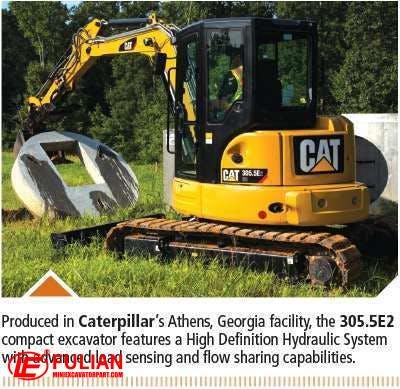
Caterpillar’s new 304.5e 2XTC is a semi excavator that also checks for semi-slip steering while smoothly performing multiple simultaneous functions at the same time. This requires a hydraulic system that is both powerful and complex. TEREX uses axial plunger, variable displacement hydraulic pumps and motors to provide load sensing and load independent flow distribution (Luther) . GREIGG, sales manager for the Compact Division of Terex Construction Americas, said: “With the load sensing system, the pump can sense the operator’s commands and direct the flow of oil to that function without stopping other functions,”says Gregg Warfel. Arm Length can affect performance. The longer arm provides greater depth of excavation, allows the mound to move backward and can be pulled further away when backfilled, reducing the need for repositioning the machine. But long arms can reduce penetration and may require counterweight.
Manufacturers usually list the standard configurations of machines used for breakthrough and lift figures and usually refer to a reference bucket to obtain these specifications. Connor says customers need to know how these requirements affect the specs. As a result of the added weight, a fast-connecting machine of standard configuration may show lower lift. The ability to lift depends on whether the bucket is used to calculate these values. “It is also important to remember that breakthrough forces are theoretical values derived from mathematics with assumptions that are 100 percent valid. They are useful for comparison, but do not reflect the absolute performance of a machine on the site.”.
Attachments
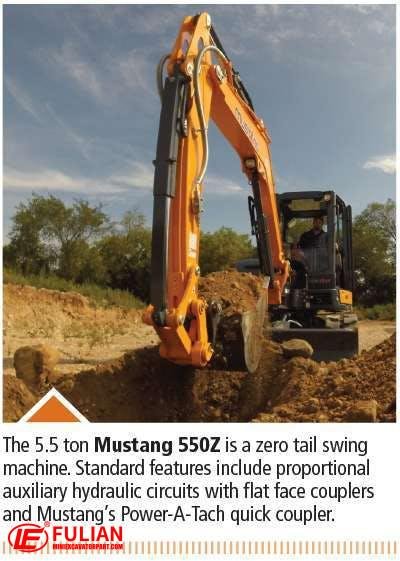
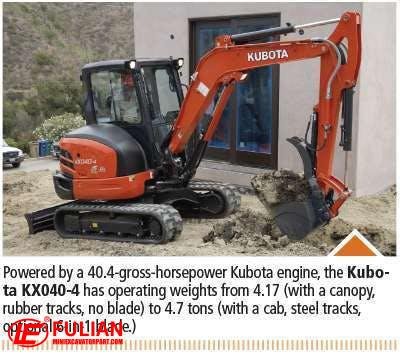
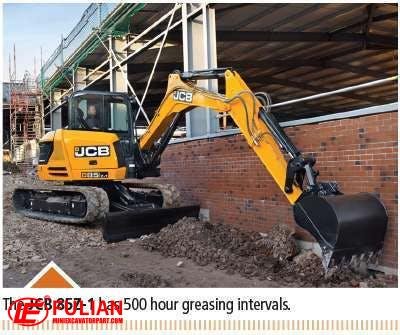
Although mini excavator is used for excavations, many are major promoters of various attachments. Thumbs and grabs are popular, as are compaction tools, auger drills and hammers\/breakers. If you know you’ll be using the mini excavator with attachments, make sure it’s in the correct specifications. JCB MINI EXCAVATOR JORDAN “The most important thing is to make sure you have the right auxiliary line,”says Jordan Dey. Need high or low traffic One-way or two-way flow”Some accessories have multiple circuits with different flow requirements. David Steger, Takeuchi’s national sales manager, says these usually fall into two categories: positioning and jobs. He cites Scheers as an example. Shears require low-flow rotation (positioning function) and high-flow shearing (work function) . It is much easier to replace the connector and bucket, but because the quick connection increases the distance from the pin to the bucket edge, it reduces the breakout force. “A quick connection makes the machine more flexible,”Ali Daei says, “But if your machine uses only one particular connection most of the time to perform a function, the standard connector will generate more production cycle time.”In theory, a quick connection allows the operator to replace the connection from the comfort of the cab. Actually, that’s not necessarily true, says Steger. The need for secondary locks or hydraulic connections still requires the operator to land.
Applications
Because mini excavator has many tools and accessories, major markets are covered. “Leasing could be 40 or 50 percent of the market,”said John Johan Comrie, product manager for Volvo’s mini excavator. “Then there are utilities, landscaping and general contracting. Accessories in these markets are readily available, but the versatility of mini excavator and their popularity in emerging and niche markets has created a demand for accessories that do not yet exist,”says Comrie, who has seen many of the accessories in these specialist apps, the owner made them all at once. “Oil and gas contractors are making their own pipe clamps, special buckets, drilling tools, and winches for pulling oilfield hardware. Their job is something no commercial product can do,”Conroy said, more unusual things he has seen include a device that can lift logs and cut them into lengths, and an excavator with a 36-inch track, for mosquito-control operations and other tasks in swamps and similar soft-ground conditions.”This required a fabricator to separate and widen the frame to fit the design.
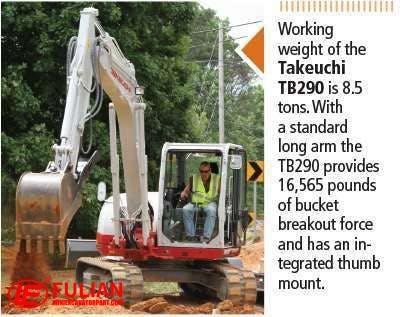
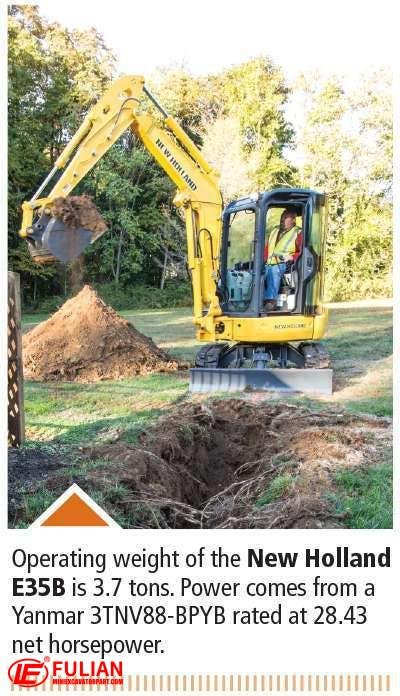
The stick and boom have also been modified to result in an 8-ton excavator that exerts less than 2 pounds per square inch of ground pressure. In the mass production of the annex, there are a variety of buckets, including some tilt and rotation of the bucket. But even with a bucket, mini excavator provides excellent digging performance. Comrie says an eight-ton mini excavator has a depth of about 14 feet, an easy-to-operate angle of 360 degrees compared to a backhoe, “It’s only going to go deeper than a backhoe,”he says, adding that contractors usually pair a mini excavator with a skidding steering loader.
Comfort
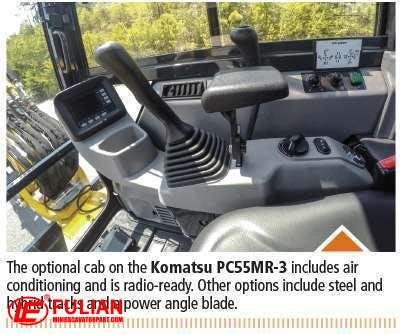
Unlike other types of equipment, mini excavators generally do not offer an optional air seat. Desmond Jurvis, Komatsu’s excavator product manager, says their standard seats are mid rise, three way adjustable, with some contours that can be adjusted to both the back and the seat. “For a machine like a wheel loader that takes a lot of time to travel and a production machine where the operator spends eight to 10 hours in the cockpit, air travel is a great option. But neither of these situations applies to mini excavator, and our standard seats are a great design for the type of machines used, but not for control. Replace it with hydraulic control. They are appreciated for their simplicity, low cost, and good feedback.
Kotter, senior product manager at Komatsu, a company that makes excavators and crawler bulldozers, said: Easy access is an important comfort feature, says Kurt Moncini, because operators go in and out of the cab several times a day. The main features are an overturned pedal, a slanted left arm support, and a sliding door that, unlike a hinged door, can be fully opened even in a narrow space. “Also, sliding doors resist the pounding of pounding winds that are unlikely to be blown off,”said Moncini. Because “Compact”now covers such a wide range of machine sizes, not all comfort features can be applied to machines of all sizes. Corey Rogers, Marketing Manager for American modern construction equipment, says their smallest model, the 1.7-ton R17z-9a, has only a canopy. The 2.6-ton r25z-9ak has an optional cab but is not air-conditioned due to space constraints. Larger models have cab and air conditioning options or standards, depending on size. Only the largest models r60cr-9a (5.9 t) and r80cr-9\/r80cr-9a (8.25 t) have digital meters, two working modes and two transmission speeds.
Serviceability
While much of the mini excavator has changed, its applicability is improving. Paul, Director of construction equipment sales and marketing for KUBOTA tractor “In many ways, it’s business as usual,”says Paul Manger, Chief Executive of oil and fat. Ensuring efficient cooling is essential. The daily check is essential manager says oems make sure the daily check points are marked, easy to find and easy to access. One incremental improvement is to group similar projects together, such as zerk accessories. The development of long-life coolants, synthetic lubricants, advances in engine oil additive packaging, and clean combustion engines in the recent past have greatly extended PM intervals. But that expansion has levelled off and is unlikely to increase sharply in the short term. Maintenance needs are easier to assess on new machines, says Tim Bourtzi, Kubota’s manager of construction equipment and product operations. “Clean fuel is essential for a stage 4 engine, so it must be easy to check for water in the fuel and drain as needed. The fuel\/water separator bowl is clear for easy viewing and the water can be drained simply by opening a valve. There is no need to open the filter componen.
Right sizing
As feature development has occurred throughout the mini excavator, select back to size. But be careful to choose only by size category, says Katy Pln, brand marketing manager for mini excavator case. “The size class is primarily an OEM language, and the OEM language does not always translate to end-user requirements. As manufacturers, the terms we use for classification and reporting purposes are not always the same as those used by owners and operators — they are more concerned with overall performance and total cost of ownership,”says Pln, to the customer, it all comes down to profitability, the simplest of which is production revenue minus cost of ownership. “The right choice is a machine that meets all your needs and provides the best overall performance, regardless of how it is classified.”